

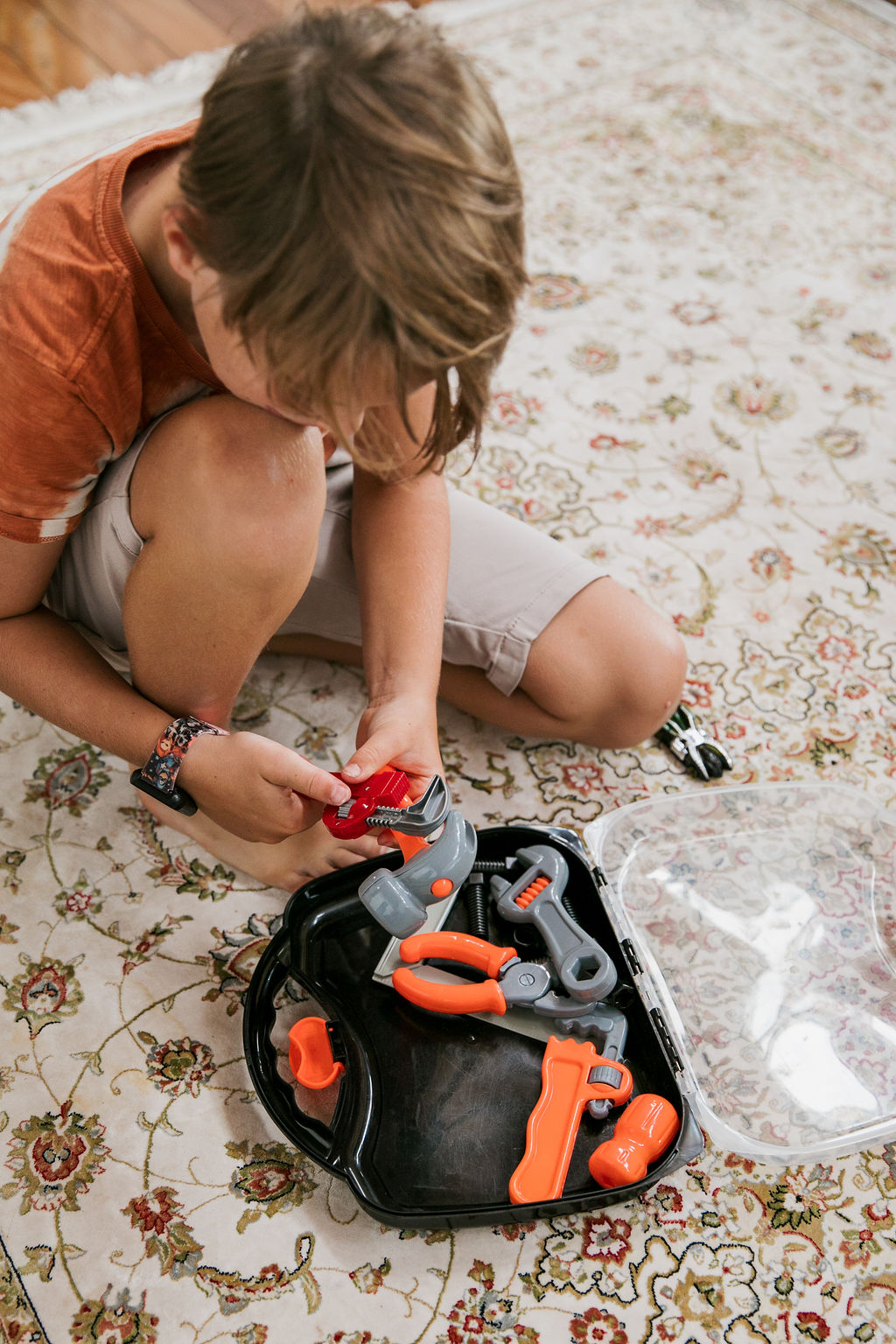
Play is essential to a child’s growth and development. However not all children develop the skills necessary to use play as a way of regulating. It is for this reason play therapy is a valuable tool in supporting the development of young children.
In recent years there has been an overall reduction in play. This is attributed to the rising development of a risk averse culture, busyness and increased urbanization. All of this combined has resulted in less time and space for the spontaneous engagement of play.
Boredom is also essential to creativity and play. Environments that are highly scheduled for children leave little time for boredom to set in. As frustrating as boredom feels it creates a place where ideas can form. How many of us have had our greatest inspiration in quiet unexpected moments?
So, what is an ideal play environment outside of the play room?
The richest environments encompass natural stimulation such as being outdoors, the independence to explore, opportunity to take risks and a quality adult interaction.
And finally, why even care about play?
One important factor is the cognitive and emotional wellbeing of a child are directly related to the quality of a child’s play. Play engages the structures in the medial zone of the thalamus in the brain which is rich in mood enhancing hormones. This makes it a powerful catalyst for laughter, joy and feel-good sensations.
References:
Brown, S. L., & Vaughan, C. C. (2009). Play : how it shapes the brain, opens the imagination, and invigorates the soul. Avery.
Whitebread, D., Basilio, M., Kuvalja, M. and Verma, M., 2012. The Importance Of Play. A report on the value of children’s play with a series of policy recommendations. [online] W r i t t e n f o r T o y I n d u s t r i e s o f E u r o p e ( T I E ), pp.3-47. Available at:
Yogman, M., Garner, A., Hutchinson, J., Hirsh-Pasek, K., & Michnick Golinkoff, R. (2018). The Power of Play: A Pediatric Role in Enhancing Development in Young Children. Pediatrics, 142(3), 1–16. https://doi.org/10.1542/peds.2018-2058