Meet Sabeeha
B Chiropractic Science | M Chiropractic Science | M Child Play Therapy
My name is Sabeeha. I am a Child Play Therapist and Chiropractor. I have always been fascinated by people and their stories, which is what drew me to this line of work. My experience as a Chiropractor opening my eyes to the connection between our bodies, what we think and what we feel. It is clear that a nurturing, caring and accepting environment is the ideal catalyst for therapeutic change. This philosophy led me to engage with local community and not for profit organisations, driven by the joy that comes from developing relationships with people.
It is a special experience when people allow you to hear their story. It was these rich encounters that have guided me to build the necessary skills to work more therapeutically with families and children. This led me to complete my Masters of Child Play Therapy with Deakin University. Being trained in these skills allowed me to find a way of working that truly empowers the individual to feel seen and heard.
As all learning is an ongoing process, I have just begun my Masters in Neuroscience with a focus on autism and depression to better understand the people and children I work with.
Play is a window into a child’s world and there is nothing more special than being invited into this unique space. It is truly a wonderful gift, and I am so excited to support families in engaging in this process. I enjoy working with individual children and am passionate about providing parents with tools to better build their understanding of themselves and to strengthen their relationship with their child. This includes parent programs in play, attunement and the tools needed to nurture a secure attachment relationship in spite of past experiences.
Play is an opportunity to build again and build with love, care and connection.

What Is Play Therapy?
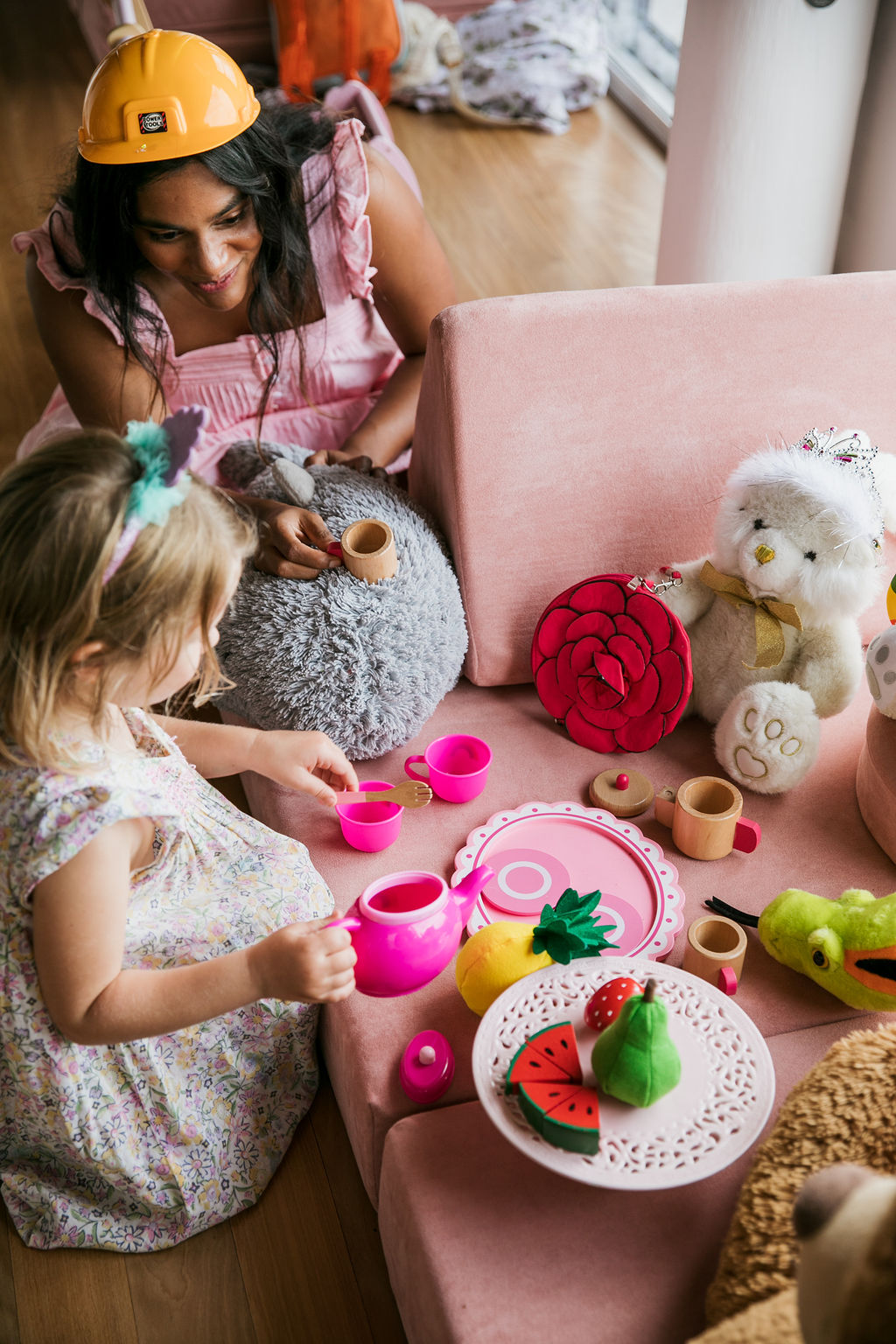
It is a creative counselling process where play is the main modality. Play is the natural language of the child and the toys become the child’s words. A play therapist is specifically trained to be able to identify and understand this.
The ability to understand a child’s play is like having a key into their world. This unlocking is achieved by creating a space of empathy, acceptance and non-judgement. It has been found that strong empathic relationships help children feel calmer, allow them to process big feelings and be more connected to themselves.

Who We Work With
Opening Doors services is available for individual therapy for the child, group therapy with the parent and child and parent support sessions.
These services are suited to children with language delays, difficulties with emotional processing, Autism, ADHD, traumatic experiences, attachment difficulties, anxiety, depression, grief, loss, trouble reading social cues, challenges in forming friendships and maintaining connections.
The richest play environments have natural stimulation, the freedom to explore and a quality adult interaction. Play is an amazing mode of expression for a child and so is the parental/caregiver relationship. Play Therapy can be used one on one and as a family due to the incredible influence of the parent in enhancing their child’s capacity to grow.
According to Stuart Browns research play and playfulness is just as important in our adult lives. The opposite of play isn’t rest but depression. Play can be described as something purposeless, all-consuming and fun. When we engage in this process our brain lights up like a firecracker and sets the stage for all kinds of positive therapeutic changes. Playing as an adult can be hard, it’s almost drilled out of us. The parent support program gives you the tools to tap into that lost part of ourselves. This skill can then be used to enhance a child’s development and strengthen the parent child connection. It is well documented that better therapeutic changes occur when a positive parent child relationship is fostered.
Types Of Play Therapy
One of the unique things about play therapy is that it can be adapted to the child in the present moment. Each child is unique, so different approaches can be used at different times to suit their needs.
The two most common ways of being by the therapist in the play space are directive and non-directive.
Directive Play Therapy
A directive approach means the therapist may take on a more active role in guiding the therapeutic process. This can include planning specific activities and processes for the child. A variety of toys, art mediums, puppets and costumes can be used.
Non-Directive Play Therapy
A Non-directive approach means the child leads the play. This can mean choosing what toys are used, how they are used and how they are named. This process can be very empowering for the child as they identify their needs and wants.
A safe secure environment where the child has autonomy is directly linked to engaging the limbic system which is at the core of their emotional processing.
Play therapy is not stagnant and moves with the flow of the child. This can call for moments of each approach. It is the capacity to recognise this and move with their pace that is of great therapeutic value. Both approaches work to nurture the emotional, social and cognitive development of the child.
What To Expect
Initial Intake: This involves both parents and goes through the presenting complaint, history of the child, family history and family dynamics. This session is a time for parents to communicate areas of concern and areas they would be interested in seeing change or improvement.
Assessment: This is where the child’s play skills are assessed. This is an important stage as it will inform the approach of play therapy that is used.
A basic form of reasoning is if pretend play skills are high the therapeutic approach can shift to non-directive and processing of emotional experiences can be prioritised. If the play skills are below the expected chronological age a directive approach will be used to first enhance play ability. This is needed so that the child has the skills available to allow for emotional expression and processing.
Plan of care is given: This is where the treatment plan and process are explained to the parents as well as the recommended length of care.
Important Information for Parents: Play therapy can be messy, it is recommended that the child wears clothes that will be ok to get arts and crafts materials on. A smock is also provided if needed
Play Therapy is about the full expression of the child and can sometimes be loud. Not to worry this is a normal part of the process and provides the child with a contained space for safe healthy expression.
“Children need the freedom and time to play. Play is not a luxury. Play is a necessity”