

Hospitalisations and medical interventions disrupt children’s lives. The experience can often be painful and create a sense of fear and anxiety. The younger the child the more challenging it becomes to communicate the necessity of these procedures. In addition, time away from routine and close ones can negatively impact a child’s attachment and sense of safety.
A traumatic medical intervention is challenging for both caregivers and children due to:
- Time away from a consistent environment and social engagement
- Procedures can often be painful
- These interventions can create feelings of anxiety and fear
- Children can experience a sense of betrayal due to lack of control
- Children can feel powerless due to not having autonomy over their space.
- Parents may also feel powerless during this process increasing familial stress levels.
Access to play allows children to keep an element of routine. Play is a vital part of a child’s development and life experience.
Benefits of Play Therapy
Play therapy is effective in reducing anxiety and stress associated with multiple medical procedures and frequent hospital stays.
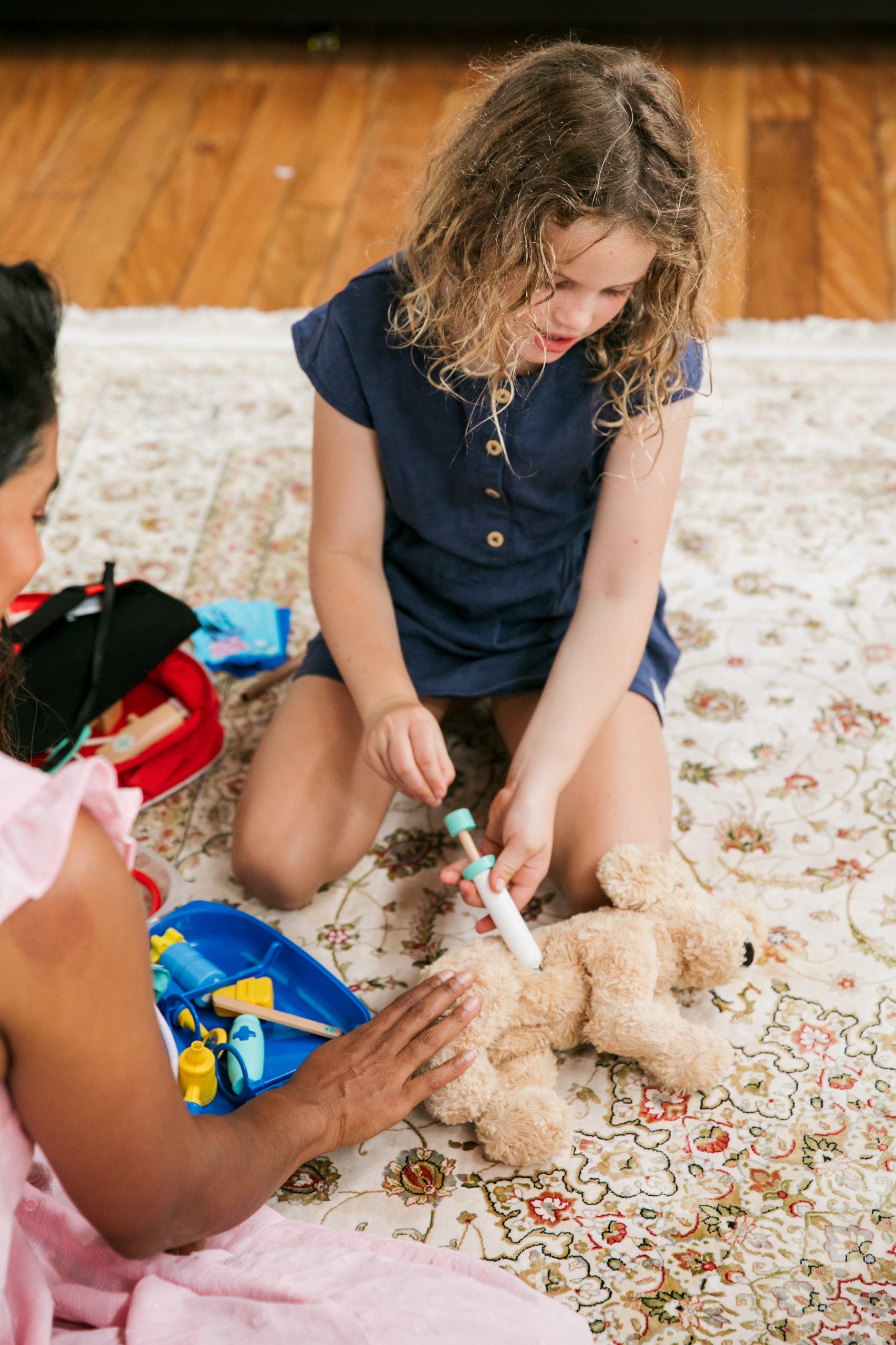
Children are able to explore their emotions with a sense of psychological safety. This is because the toys can be used as symbols for processing difficult experiences. The use of role-play assists children in being able to act out and prepare for medical interactions This practiced familiarity results in a decrease in anxiety before and after the procedure.
Play Therapy is an avenue in which children can rework frightening experiences in a safe environment. It allows children to build confidence and self-esteem in their capacity to cope with what is happening.
Empowerment is achieved through play as children replay previous experiences with the flexibility to examine different endings and emotional responses. This freedom to explore results in a sense of mastery and control over their traumatic events. Children are able to develop their own personal theory and meaning of their significant life experiences. Which is an essential skill for emotional processing.
References:
Godino-Iáñez, María José et al, “Play Therapy as an Intervention in Hospitalized Children: A Systematic Review” (2020) 8(3) Healthcare (Basel) 239
Locatelli, M. G. (2020). Play therapy treatment of pediatric medical trauma: A retrospective case study of a preschool child. International Journal of Play Therapy, 29(1), 33-42. https://doi.org/10.1037/pla0000109