
Pretend play has 6 main aspects to it. One of them is called Object Substitution.
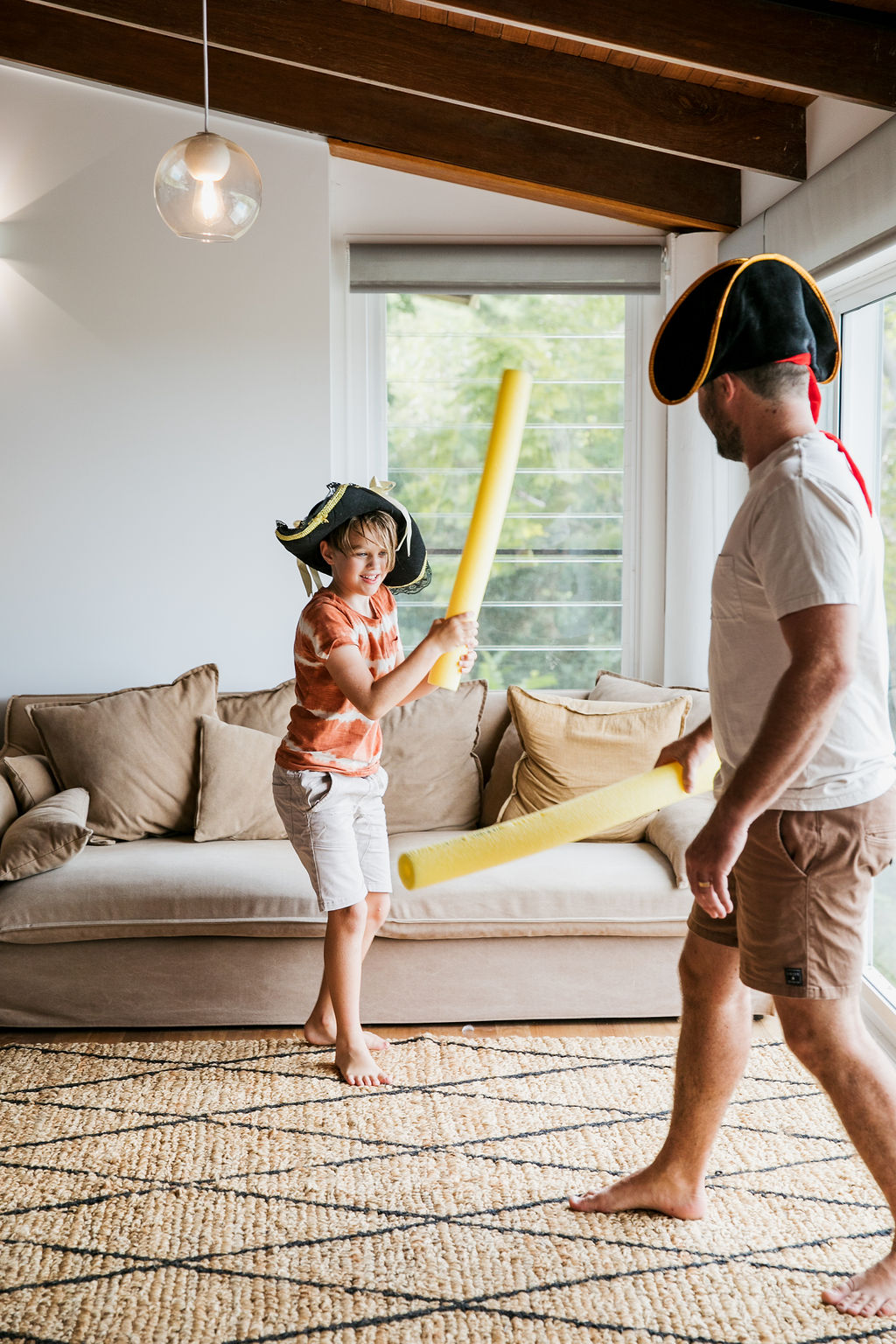
Object substitution is the ability to use an unstructured toy such as a box or toilet roll as something entirely different to what it is.
This could be using a box as a bed for baby, a box as a car, a toilet roll as a wand or a looking glass.
So why care about these seemingly random bits of household rubbish?
This skill requires flexibility in thought as the child suspends reality to go into this world of make believe.
Object substitution has an interesting relationship with problem solving, flexibility and reading social ques. This skill is seen less often in children with social difficulties and autism.
It is well understood that the quality of our relationships is linked to our sense of wellbeing.
Suddenly household rubbish has more value to it, particularly If you are looking to develop your child’s flexibility and social understanding.
Just another way play can be used to nurture a child’s growth and development.
References:
O’Connor C, Stagnitti K. Play, behaviour, language and social skills: the comparison of a play and a non-play intervention within a specialist school setting. Res Dev Disabil. 2011 May-Jun;32(3):1205-11. doi: 10.1016/j.ridd.2010.12.037. Epub 2011 Feb 1. PMID: 21282038.
McAloney, K., & Stagnitti, K. (2009). Pretend play and social play: The concurrent validity of the Child-Initiated Pretend Play Assessment. International Journal of Play Therapy, 18(2), 99–113. https://doi.org/10.1037/a0014559